Sawdust, Sandpaper and Small Wishes: The UK Men’s Sheds Making Britain a Kinder Place to Ask
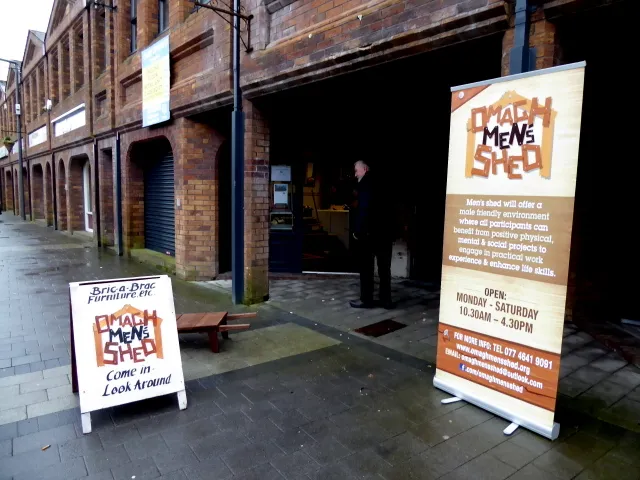
Photo: Kenneth Allen , CC BY-SA 2.0, via Wikimedia Commons
On a damp Tuesday morning in a workshop somewhere off the high street, the smell is familiar: sawdust, machine oil, and the faint ghost of a kettle. Around a bench, four men in fleeces are debating the angle of a bracket. The bracket belongs to a child’s ride-on toy—a 1970s pedal car that has been in one family for three generations. It was nominated for repair by a granddaughter who wanted her grandad to see it run again. The shed said yes.
The shed as a wish hub
Men’s Sheds are not new. The movement began in Australia in the 1990s and took root in the UK in the 2000s, built on a simple idea: give men a place to make things, drink tea, and talk without it feeling like therapy. The UK Men’s Sheds Association now supports hundreds of groups, from Cornwall to the Highlands. What is changing in 2026 is what those sheds are being asked to do. Alongside bird tables and bench repairs, they are quietly taking on what locals call wish projects: small, specific, often emotional jobs for people who need a lift.
It might be a wooden memory box for a widow who wants somewhere safe for her husband’s letters. A raised planter for a neighbour whose knees no longer allow for kneeling in the flowerbed. A simple birthday plaque for a care home resident turning ninety. None of these are grand gestures. That is precisely the point.
Why practical gifts land differently
The appeal is easy to understand. A shed can offer what a gift card cannot: time, skill, and attention. Someone has listened to the wish, measured it, cut the timber, sanded the edges, and thought about how it will be used. The object arrives with a story attached. For the person receiving it, that can matter more than the thing itself.
For the shed members, the benefits run both ways. Men’s Sheds have long been recognised as a way to tackle isolation and give retired people a reason to leave the house. A wish project adds purpose to the routine. It gives the group a deadline, a brief, and a reason to pick up the phone to each other. The tea breaks are still there. There are just more of them, and more to talk about.
How a wish gets nominated
There is no single national system, and that is part of the charm. Most sheds operate locally, so the route to a wish is usually through the community itself. A neighbour might mention it to a shed member. A GP surgery, library, or community centre might pass on a request. Some sheds have a simple form on their website or a noticeboard at the village hall. Others rely on word of mouth, which means the best place to start is often a phone call or an email to your nearest group.
The most successful nominations tend to be specific and modest. “A bench for my dad so he can sit in the garden again” is easier to act on than “something nice for my dad.” Sheds also need to know about access, safety, and whether the item needs to be weatherproof, portable, or built to fit a particular space. A good wish is not a demand. It is an invitation to help.
A different kind of giving circle
What makes this model interesting in 2026 is that it sidesteps the usual fundraising machinery. There is no big campaign, no glossy appeal video, and often no money changing hands. A shed might cover the cost of materials through small donations or a whip-round. A local timber merchant might drop off offcuts. Someone’s shed becomes a giving circle, with a table saw in the middle.
That practicality is catching on. In a year when many people are looking for ways to support their neighbours without adding to a landfill, a repaired toy or a locally built bench feels like a quiet answer. It is community giving in its most literal form: one person’s time and skill, offered to another person’s need. The fact that it comes with a cup of tea and a bit of banter is a bonus.
How to get involved
If you know someone with a small, practical wish, start by finding your nearest Men’s Shed through the UK Men’s Sheds Association. Ask what kind of projects they take on and whether they have capacity. Be ready to explain the wish clearly, and be patient—sheds are run by volunteers, and the workshop diary can fill up.
If you are a shed member, consider setting aside one project a month for a local nomination. Keep a simple log of requests. Tell your local paper or community newsletter when something is finished. The more people see what a shed can do, the more wishes will find their way to the bench.
And if you are simply looking for a feel-good story to share, keep an eye on the sheds. Somewhere in a workshop near you, someone is measuring twice and cutting once for a stranger. That is a wish being granted, one careful cut at a time.