A Candle in the Middle: The UK Bakers Putting Birthdays Back on the Table
There is a particular kind of quiet that follows a birthday when money is tight. No cake on the table. No candle to blow out. Perhaps a card, perhaps not. It is not the sort of thing a child announces at school, and it is not the sort of thing a parent easily admits. But across the UK, a growing number of independent bakeries are making sure that quiet does not go unanswered.
The cake on the counter
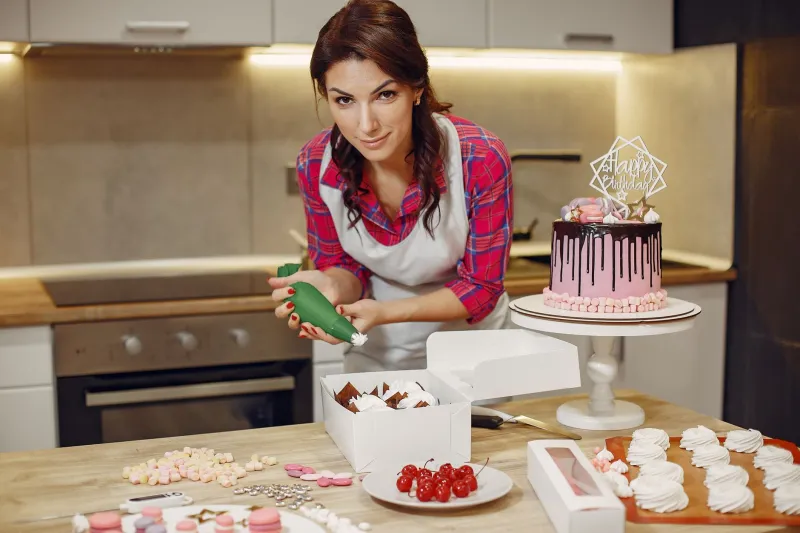
The idea is simple enough. A local bakery agrees to make a birthday cake — sometimes one a week, sometimes a handful a month — for a family that has been nominated by a food bank, a community larder, a school or a nearby family support group. The cake is decorated, boxed, and collected discreetly. Alongside it goes a packet of candles and, often, a small gift: a colouring set, a hair accessory, a football, a book. Nothing extravagant. Just enough to make the day feel like a day.
In 2026, these arrangements are rarely formal charities with logos and leaflets. More often they are handshake agreements between a baker and a community group, kept going by a WhatsApp message and a shared understanding that nobody should have to explain why they need a cake. Some schemes run all year; others appear in the weeks before Christmas or during the school summer holidays, when family budgets are stretched thinnest.
How a nomination actually moves
The route from need to cake is usually short and deliberately low-friction. A food bank volunteer might notice a parent quietly asking whether there are any birthday treats in the parcel. A school office might know that a child has never had a party. A community larder might keep a simple form — paper or online — where a family can say yes to a cake without having to tell their whole story.
From there, the bakery gets a first name, an age, a collection date and any allergy or dietary notes. That last part matters. A good scheme asks about egg-free, dairy-free or gluten-free needs at the point of nomination, not on the morning of collection. The cake is then made in a normal bakery kitchen, boxed with the child’s name on the lid, and handed over to the nominating group rather than the family directly. That small layer of privacy is the whole point. Nobody wants a birthday to feel like a means test.
The people at the proving bench
Ask a baker why they do it and you rarely get a speech. You get a shrug, a floury hand, and something like: ‘It’s an hour’s work, isn’t it?’ But that hour adds up. A single independent bakery might make forty or fifty birthday cakes a year through a scheme like this. A small team might take it in turns to cover the extra bake on a Friday morning. A one-person shop might cap it at two a month so it stays manageable.
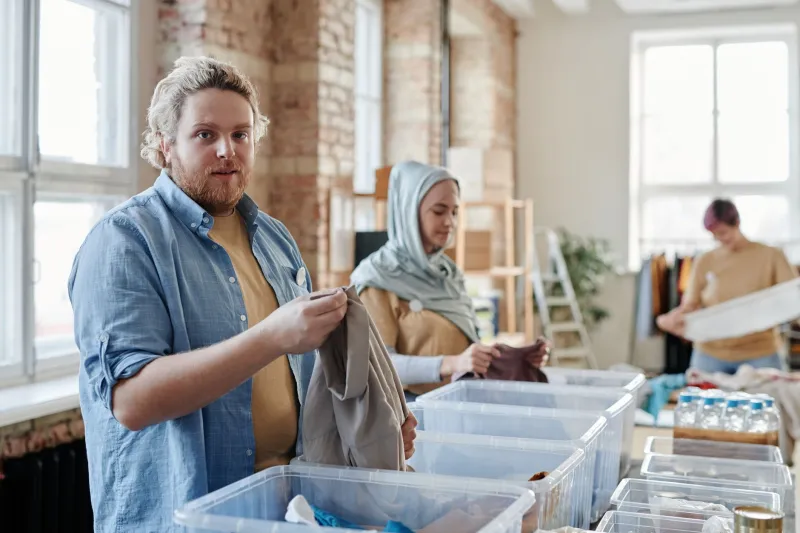
The volunteers behind the scenes are just as understated. They are the ones who remember to ask the question in the first place. They are the ones who ring the bakery to check the collection time, who wrap the small gift, who make sure the candles match the age. It is unglamorous logistics, and it is exactly what turns a kind idea into a birthday that actually happens.
Why a cake is not just a cake
It would be easy to dismiss a birthday cake as a nice-to-have. But anyone who has watched a child’s face when the candle is lit knows it is doing something bigger. A birthday is one of the few days in the year that belongs to a child entirely. It says: you are here, you are counted, you matter. When a family is juggling rising bills and shrinking budgets, that is often the first thing to go — not because it does not matter, but because it is the softest place to cut.
A cake does not fix a household budget. It does not pay the gas bill. But it puts a candle in the middle of a difficult week and gives a child a moment that is theirs. In a country where food banks are still part of everyday life in 2026, that small, specific act of kindness has a way of travelling further than it looks.
How to get involved where you live
If you want to support this kind of scheme, start local. Ask your nearest independent bakery whether they already work with a food bank or community group; many do and simply do not advertise it. If they do not, a conversation with a local larder or family centre is often all it takes to set something up. Keep it small and clear: one cake a month, a named contact, a simple nomination form.
If you are not a baker, you can still help. Cash donations cover ingredients and boxes. Gift cards for local shops cover the small present. Time covers the collection and delivery. And if you know a family who might need this, do not wait for them to ask. Mention it gently, through a school, a health visitor or a community group, and let the scheme do the rest.
A quiet kind of celebration
The best of these schemes do not make a fuss. They do not put the family on a stage or turn a birthday into a fundraising story. They just make sure that when the day comes, there is a cake on the table and a candle in the middle of it. In 2026, that feels like a very British kind of wish-granting: modest, practical, and carried out by people who would rather be at the oven than in the spotlight.
So next time you pass a bakery window and see a row of plain sponges waiting to be decorated, look a little closer. Somewhere behind the counter, there may be a list with a first name and an age on it. And somewhere across town, a child may be about to get a birthday they did not expect.