Row F, Seat Twelve: The UK Theatres Turning a Returned Ticket into a Milestone Night Out
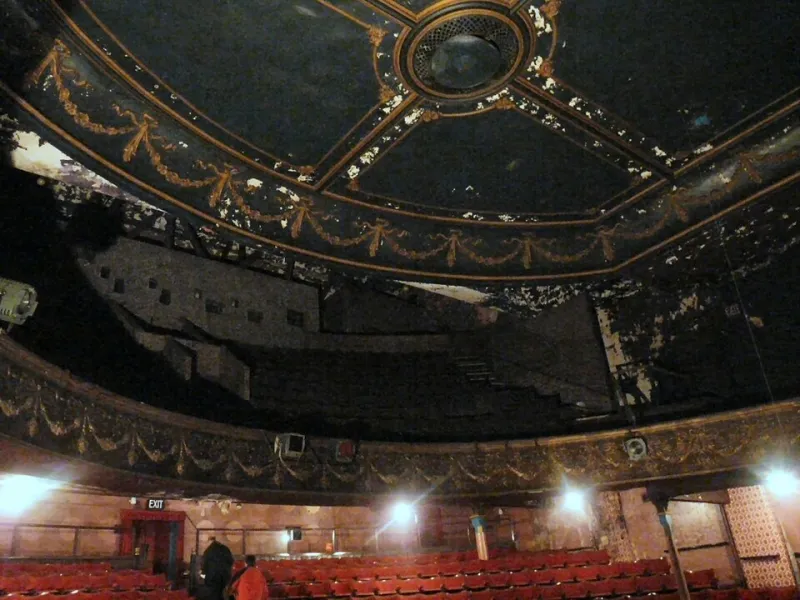
Photo: Gerald England , CC BY-SA 2.0, via Wikimedia Commons
There is a particular kind of quiet at a theatre box office about an hour before curtain-up. The foyer smells faintly of coffee and hairspray. Someone is checking a seating plan. Someone else is on the phone, gently asking whether the party of four still needs all four seats. And on the counter, beside the card machine and the lost-property tub, there is often a notebook. It is not a grand ledger. It is the sort of notebook you buy in a stationery aisle and fill with pencil. But in 2026, those notebooks are becoming unlikely wish-granters.
The Notebook Behind the Glass
The idea is simple enough. A ticket gets returned. Perhaps a babysitter falls through, a train is cancelled, a cold gets worse. The seat is paid for, or partly paid for, and the venue could simply resell it. Often it does. But increasingly, UK theatres are asking a different question: could this seat go to someone who would never otherwise be in the room?
That question has spawned a patchwork of small schemes. Some venues keep a paper waiting list of community partners. Some run pay-it-forward ticket envelopes in the foyer. Some have a modest fund, topped up by audience donations, that covers the cost of a returned seat being passed on. Others simply rely on the kindness of the person who bought it. The mechanics vary. The feeling does not.
A Seat With a Story
What makes a theatre ticket such a good gift is that it is not just an object. It is a time, a place and a shared experience. A birthday can be marked with a box of chocolates, but a birthday can also be marked by a person sitting in Row F, watching a curtain rise, feeling the hush before the first line. An anniversary can be a card. It can also be two seats together, a programme on a knee and an interval drink that tastes slightly better because someone else made it possible.
The returned ticket is a strange little gift. It is not new. It may have someone else’s name on the booking. It might be a single seat, slightly off-centre, not the one anyone would choose from a seating plan. But that is part of its charm. It arrives with a story attached: someone could not come, and now someone else can.
From Return to Row F
The chain usually starts with a phone call. A box-office staff member answers, listens, and offers the usual options: exchange, credit, refund. Then comes the quieter question. Would you be happy for us to pass the seat on? Sometimes the answer is an immediate yes. Sometimes the caller asks for it to go to a local group. Either way, the seat moves into a kind of holding pattern.
From there, the work is often done by front-of-house teams, volunteers and community partners. A local charity might know a family who have had a hard year. A school might know a pupil who has never seen a live show. A care home might know a resident whose birthday is coming up. The theatre supplies the seat. The partner supplies the context. Nobody needs to make a speech about it. The point is not to create a grand ceremony of giving. The point is to make the evening feel ordinary and special at the same time.
The First-Panto Rule
If there is a unofficial rule in all this, it is that panto season brings out the wish-granter in everyone. A first panto is a milestone all by itself. There is the bright lighting, the songs, the slightly chaotic audience participation and the interval ice cream. For a child who has never been, it can be enormous. For an adult who missed out as a child, it can be unexpectedly moving.
The same is true of other firsts. A first ballet. A first play. A first trip to a local theatre that someone has walked past for years but never entered. The spare seat does not have to be in a famous auditorium to matter. In fact, the local venue often makes it more potent. The bus is shorter. The building is familiar. The person on the door might even know your name.
Why Theatres Make Good Wish-Granters
Theatres are built for collective experience. They are also built on tiny acts of coordination. Someone counts the tickets. Someone checks the accessible entrance. Someone makes sure the heating is on. That infrastructure makes it easier to slot in one more person, one more birthday, one more anniversary. It is not that theatres have endless resources. It is that they already know how to make a night happen.
There is also something about the nature of a returned ticket that keeps the giving dignified. It is not a grand gesture. It is a seat that would otherwise be empty. The recipient is not being asked to explain their circumstances. They are being invited to a show. That distinction matters. Kindness works best when it does not feel like a spotlight.
Small Print, Big Feeling
None of this is a replacement for proper arts funding, and nobody working in a box office would pretend otherwise. But as a small, human-scale ritual, the returned-ticket chain is hard to beat. It turns a cancellation into a possibility. It gives front-of-house staff a reason to smile when the phone rings. It lets an audience member feel that their change of plan did not simply vanish into a computer system.
So next time you see a spare seat in Row F, look twice. It might be a no-show. It might be a late return. Or it might be a birthday surprise, an anniversary treat, or a first panto waiting to happen. In 2026, UK theatres are quietly proving that a night out can be a wish granted, one empty seat at a time.